CHEN Wenxuan
Dirty Is Good

“Dirty is Good” Exhibition View, 2025. Photography: WANG Lei
Advertisement


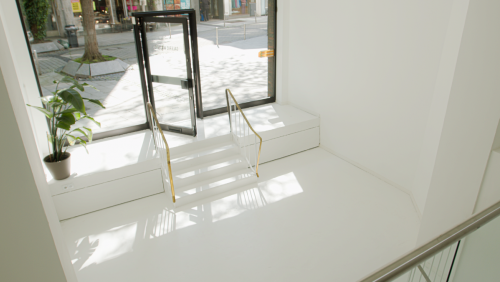
“Dirty is Good” Exhibition View, 2025. Photography: WANG Lei

“Dirty is Good” Exhibition View, 2025. Photography: WANG Lei

“Dirty is Good” Exhibition View, 2025. Photography: WANG Lei

“Dirty is Good” Exhibition View, 2025. Photography: WANG Lei

“Dirty is Good” Exhibition View, 2025. Photography: WANG Lei

“Xiao Meisha”, Stainless Steel, Silica Sand, Biomimetic Fish Scale, Iron Plate, Oil-based Painta, Acrylic Paint, 135x35cm, 2025. Photography: WANG Lei

“Lord of the Flies II”, Stainless Steel, Stab-resistant shuttle-woven fabric, Nylon webbing, Tyvek, Acrylic, 50×50cm, 2025. Photography: WANG Lei

“Scepter”, Resin, Oil-based Paint, Stainless Steel, 40×27×100cm, 2025. Photography: WANG Lei

“Dirty Ghost”, Stainless Steel, Acrylic, Silica Sand, Powder Sintered Aluminum, Acrylic Paint, 156×131×36cm, 2025. Photography: WANG Lei

“Dirty Ghost” (Detail), 2025. Photography: WANG Lei

“Dirty Ghost” (Detail), 2025. Photography: WANG Lei

“Dirty Ghost” (Detail), 2025. Photography: WANG Lei
SENSE GALLERY presented artist Chen Wenxuan’s first solo exhibition, Dirty Is Good, on 13 December 2025. Curated by Shen Yuting, the exhibition ran through 18 January 2026.
The exhibition’s English title, Dirty Is Good, is inspired by the global advertising slogan of a major household-products corporation. Introduced in the early 2000s, this tagline has been turned into countless classic television scenes: children are said to need play and falls in order to get to know the world, while powerful stain removers guarantee that everything can be protected, reversed, and reset. Getting dirty is the price of growing up; stains are badges of courage; and clean bodies and clothes are made the basis of health, propriety, and refinement. In a longer historical perspective, soap advertisements were once used to disseminate imperial “civilization”. They bound fair skin and orderly households together with colonial rule, turning “washing clean” into a form of moral elevation. Looking back from here, “dirty” seems never to have been a purely natural state, but a sign filtered jointly by technology, consumption, and ethics. Only those stains that can be converted into experiences of growth, social progress, and brand goodwill come to be regarded as “good” dirt.
Just like the children in the commercials, urban dwellers’ encounters with “nature” mostly take place in city parks. The scenes continue to unfold between Shenzhen, where Chen Wenxuan was born, and London, where he later lived: the seaside bathing beach, repeatedly reshaped and carefully maintained by the tourism industry, becomes a natural landscape disciplined by human intervention.The sandcastle in the sculpture borrows the iconic castle image of a well-known theme park, further pushing the idea of “transforming nature” toward that of “producing nature”. Dirt is “matter out of place”: sand counts as an element of scenery only when it is confined to specific zones—spread along the shoreline, or piled up into a castle. Once it enters the interior or spills beyond the frame, it is immediately identified as a stain to be removed. At the same time, “dirty” also becomes a technique of imitation: in order to manufacture a nature that appears primordial, cracks, wear, and marks must be carefully arranged under conditions of tight control, so that disorder, misalignment, and error are themselves constructed into the scene.
The paintings in the exhibition further extend the discussion of “simulation”. The training puppets used for motion capture in digital film translate the positions of the fingers into computable signals, turning the performer’s hand and the prop into performance parameters that can be read by software. The gardening gloves that imitate animal paws, meanwhile, block direct contact with the soil while presenting, in both their appearance and movement, a functional kind of “wildness”. On the material level, Chen Wenxuan mobilizes “outdoor” components such as carabiners, nylon webbing, and tough fabrics. In industrial design, these materials are already premised on being stain-resistant, waterproof, and durable; they are used to ensure that when people enter nature, they can still remain safe and clean. The handmade labels at the edges of the canvases adopt the standardized washing symbols of the garment industry, foregrounding an anticipation and management of stains. At this point, “dirty” is finally summoned back in a ghostly form.
Through a series of juxtapositions and recurrences of images, Chen Wenxuan loosens and dismantles the hidden narratives surrounding “dirty”, tracing it as a spectral form of consciousness that moves between concept and matter. The subtle connections between cleaning consumption, artificial landscapes, and technological display together form a thread that runs throughout: how “dirty” circles within the world-picture we have come to take for granted. In this process, the exhibition also points to the operations of various centrisms—how the axial structures of the human, capital, and so-called civilization, in the name of the “normal” and the “correct”, sediment particular values and fears into an order and disguise it as natural. Perhaps it is precisely in those traces deemed superfluous, erroneous, or improper that we can briefly glimpse the ways in which the world is constructed—and the possibility that it might still be rearranged.
ABOUT ARTIST:
Chen Wenxuan (b. 1995) lives and works in Shanghai. He graduated from the Sculpture Department of the Central Academy of Fine Arts in 2019, and holds the MFA Fine Art at Goldsmiths, University of London in 2022. Chen Wenxuan’s practice focuses on the multiple ways in which “nature” operates as a symbolic language within processes of industrial production, with particular attention to the forms of translation, deconstruction and alienation generated in this process. Working through materials, he draws on strategies from industrial and product design to analyse how capital taps into and organises consumers’ unconscious impulses, and to examine how industrially constructed “shelters” shape social perceptions of cleanliness, comfort and “normality”.
SHEN Yuting