Kristina Nagel, Marie Matusz
core
Project Info
- 💙 max goelitz gallery
- 🖤 Kristina Nagel, Marie Matusz
- 💜 Maxine Weiss
- 💛 Marjorie Brunet Plaza
Share on

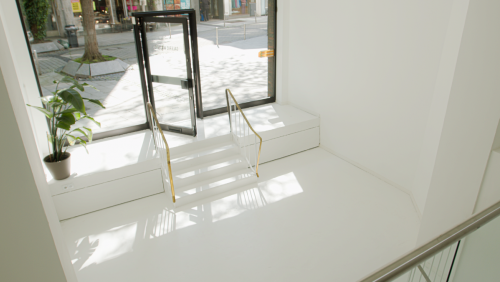
Installation view core, 2026, Berlin | Courtesy of max goelitz, copyright the artist | Photo: Marjorie Brunet Plaza
Advertisement


Installation view core, 2026, Berlin | Courtesy of max goelitz, copyright the artist | Photo: Marjorie Brunet Plaza

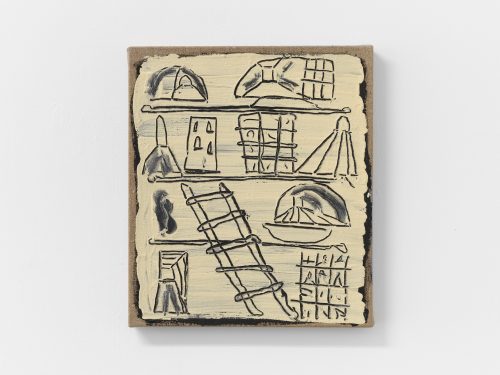
Marie Matusz, Coated in Compassion, 2022 | Courtesy of max goelitz, copyright the artist | Photo: Marjorie Brunet Plaza

Marie Matusz, Coated in Compassion, 2022 | Courtesy of max goelitz, copyright the artist | Photo: Marjorie Brunet Plaza

Marie Matusz, Coated in Compassion, 2022 | Courtesy of max goelitz, copyright the artist | Photo: Marjorie Brunet Plaza

Kristina Nagel, NON-FIELD I, 2026 | Courtesy of max goelitz, copyright the artist | Photo: Marjorie Brunet Plaza

Kristina Nagel, NON-FIELD V, 2026 | Courtesy of max goelitz, copyright the artist | Photo: Marjorie Brunet Plaza

Installation view core, 2026, Berlin | Courtesy of max goelitz, copyright the artist | Photo: Marjorie Brunet Plaza

Installation view core, 2026, Berlin | Courtesy of max goelitz, copyright the artist | Photo: Marjorie Brunet Plaza

Kristina Nagel, NON-FIELD IV, 2026 | Courtesy of max goelitz, copyright the artist | Photo: Marjorie Brunet Plaza

Kristina Nagel, NON-FIELD IV, 2026 | Courtesy of max goelitz, copyright the artist | Photo: Marjorie Brunet Plaza

Marie Matusz, Element-Anti-Element, 2026 | Courtesy of max goelitz, copyright the artist | Photo: Marjorie Brunet Plaza

Installation view core, 2026, Berlin | Courtesy of max goelitz, copyright the artist | Photo: Marjorie Brunet Plaza

Marie Matusz, All Matter is Alive at its Core, 2026 | Courtesy of max goelitz, copyright the artist | Photo: Marjorie Brunet Plaza

Kristina Nagel, NON-FIELD III, 2026 | Courtesy of max goelitz, copyright the artist | Photo: Marjorie Brunet Plaza

Kristina Nagel, NON-FIELD III, 2026 | Courtesy of max goelitz, copyright the artist | Photo: Marjorie Brunet Plaza
In "core", Kristina Nagel and Marie Matusz explore how perception is structured, guided, and shifted, and how the visible emerges as a dynamic, mutable constellation. Both positions make the instability of representation tangible within the exhibition and show how image, material, and space generate conditions that shape the act of seeing.
In her photographs, Kristina Nagel investigates how perception is shaped by strategies, codes, and assumptions, and how these can be shifted by material and form. Through abstraction, proximity, and alienation, she questions mechanisms of representation and demonstrates how the limitation of information challenges our habits of seeing and destabilizes patterns of recognition. In the presented body of work, leather comes to the fore as surface and texture, functioning operatively rather than iconically. Objects and bodies are transformed into formal elements and structures that mark lines, volumes, and spatial trajectories.
In the photographs of the series "NON-FIELD", black leather spreads across the image surface in fragmentary, varying forms and textures, blurring the boundaries between subject and object. The proximity of the camera allows both elements to dissolve into one another, condensing in the contact zone of two leather bodies. Nagel’s interest lies in structuring and shifting perception: by depersonalizing the body and reducing identifiable features, she develops her own logic of representation within visual systems. Leather does not function iconically here but operationally: it directs attention to surface, line, and texture, making the act of viewing palpable as a dynamic, mutable structure. As Theodor Adorno emphasizes in his “Aesthetic Theory” (1970), works of art are never static; their value emerges through the ongoing process of transformation and the dialectical tension between substance, form, and context. Nagel transfers these principles to the materiality of photography, printing her motifs on PVC tarps. In doing so, she subverts conventional representations of the medium and dissolves the classical hierarchy of photography as a purely representational medium. PVC serves not only as a carrier material but as a tactile surface that integrates the image into the space, making its materiality perceivable. "NON-FIELD" generates a deliberate “anti-aura”: the work exerts its effect not through traditional uniqueness or museum-like distance, but through presence, perception, and spatial experience. The interplay of content and materiality opens up a space where perception and corporeality intertwine, without reverting to traditional categories of object and subject.
Marie Matusz focuses on space as a formative element of visibility. Her vitrines and spatial modules create a choreographic order in which volumes, sightlines, and perspectival relations guide perception and render visible the conditions under which seeing is structured. Inside and outside, proximity and distance, position and perspective thus become questions that extend beyond the formal content of the works, revealing how cultural, institutional, and architectural frameworks shape and organize our ways of seeing.
The series "Long Ago, Tomorrow" stages sculptural scenes within glass vitrines, where Marie Matusz arranges plant-like forms, steel pedestals, and geometric elements in relation to one another to challenge the experience of seeing. Through the grey-tinted glass, the sculptural arrangements appear shielded and unapproachable, while at the same time the surrounding space is reflected in the glass surfaces. Objects, people, and architecture thus overlap, intertwining into unstable configurations that continuously reshape themselves through movement and shifting perspectives. Interior and exterior, proximity and distance, visibility and concealment become relational dimensions that reveal the mechanisms of perception. Matusz deliberately works with these spatial structures and their displacements. Her practice is grounded in a critical engagement with forms and their inherent meanings and power structures, closely linked to the architectural conditions of the exhibition space: volume, sightlines, and perspectival relations create a choreographed order in which vision is both guided and interrogated. The systematic arrangement of "Long Ago, Tomorrow", reminiscent of early modern cabinets of curiosities or museum displays, makes the instability and construction of representation tangible, demonstrating how time, material, and structure shape perception. At the same time, the works with their glass casings evoke collective experiences of distance, alienation and the absence of direct encounter. Their reflective surfaces recall screens and the fleeting nature of perception and circulation in a world where information, commodities, emotions, and values are digitally mediated. In this context, "Long Ago, Tomorrow" becomes a projection surface for patterns of perception and their social feedback, thereby transforming into a bearer of value itself.
Placing Nagel’s image systems alongside Matusz’ spatial configurations shows that perception is not a passive act. It is relational and constructed: what we experience as identity, proximity, or presence is shaped by the conditions established by the artists, which organize visibility and direct the gaze. The exhibition core reveals to which extent our way of seeing is shaped by regimes of materiality, imagery, and space.
Maxine Weiss